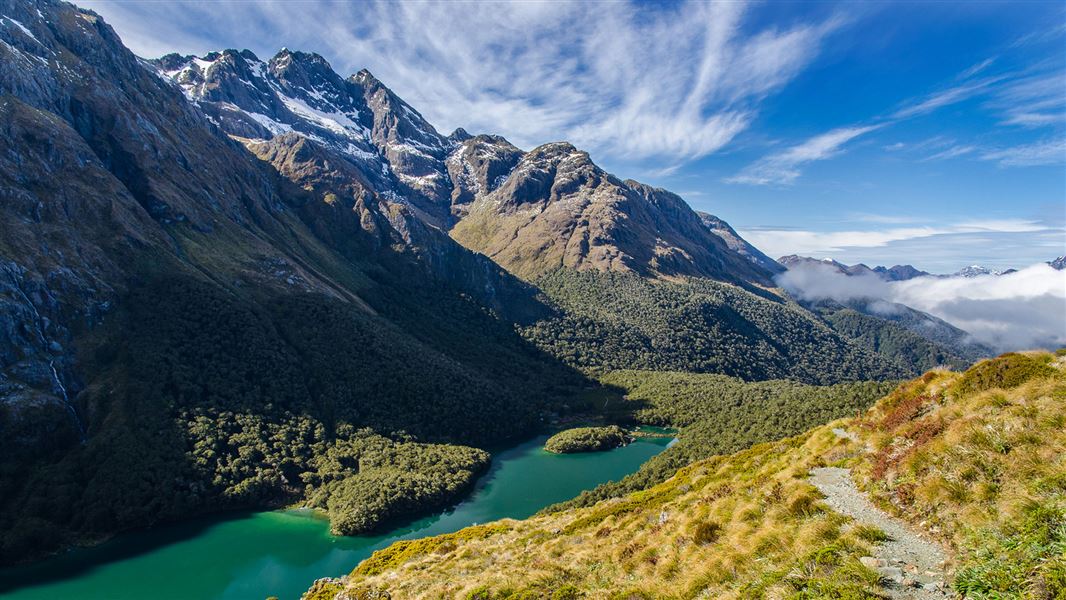
- 1DOC's weather page says about 7 metres of rain falls a year in the Fiordland area, over about 200 rain days. Other sources give different figures for Milford Sound, and we show each.
- 2DOC says Fiordland summer days are typically between 10 and 18 degrees Celsius, and winter (May to November) between 1 and 9 degrees, though cold weather can come at any time.
- 3DOC says avalanche risk is mainly in winter and spring, especially between late August and early November; its avalanche and track pages give different windows by track.
- 4DOC advises planning for all conditions, including at least one wet day, and checking the latest weather and conditions before you go. This guide gives no forecast.
01 / Start with the short answer
How wet is Fiordland?
Very: DOC gives about 7 metres a year over about 200 rain days for the Fiordland area. Other sources differ for Milford Sound.
Rain is part of the place. DOC says Fiordland's rainfall comes from the Roaring Forties westerlies, which pick up moisture over the Tasman Sea and drop it as heavy rain in the west and snow higher up. How much, and on how many days, depends on which source you read and which place it measures: the Fiordland area, the national park or Milford Sound itself. The sources do not agree exactly, so the next section shows each one with its scope rather than picking a single number. None of this is a forecast; check the latest weather and conditions before you go, as DOC advises.
02 / Rain by source
How much rain, and on how many days?
About 7 metres and 200 rain days (DOC, Fiordland area); up to 7 metres (DOC, Milford Sound); around 6.5 to 7 metres (Visit Fiordland); roughly 180 rain days (Tourism New Zealand).
| Source and scope | Rain a year | Rain days a year |
|---|---|---|
| DOC weather page, Fiordland area | An average of about 7 metres | An average of about 200 rain days |
| DOC journey tips, Milford Sound | Up to 7 metres | Not given |
| DOC Milford Track page, Fiordland National Park | Up to 9,000 millimetres | Not given |
| Visit Fiordland, Milford Sound | Around 6.5 to 7 metres, and has had up to 9 metres | Not given |
| Tourism New Zealand, Milford Sound | Not given | Roughly 180 days of rain |
03 / Rain and the fiords
Is a wet day a wasted day?
Not according to Tourism New Zealand, which advises not to cancel for a rain forecast.
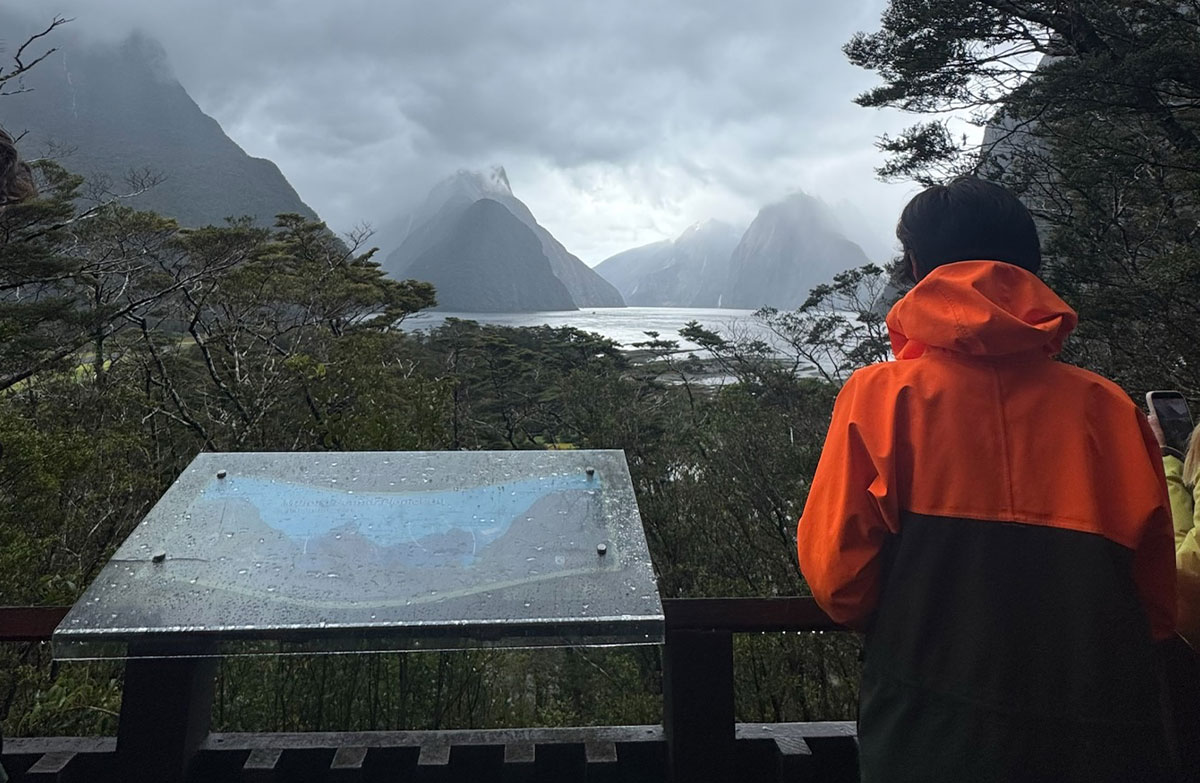
Tourism New Zealand advises not to cancel a Milford Sound trip for a rain forecast: in rain, it says, the mountains are draped in mist and bursting with waterfalls. Visit Fiordland calls Milford Sound the wettest inhabited place on the planet; that is Visit Fiordland's claim, and the figures above show why sources describe the rain differently. DOC calls Milford Sound one of the wettest places in New Zealand and says the weather can change quickly. The rain shapes the fiords below the surface too: DOC says heavy rainfall creates a permanent freshwater layer on the fiords, from 5 centimetres to over 10 metres deep and stained by tannins, which restricts most marine life to the top 40 metres.
Going on a wet day?
This cruise leaves from the Milford Sound Visitor Terminal, and its own listing says that on a wet day the fiord is spectacular, with its waterfalls.
04 / Temperatures
How warm or cold is it?
DOC gives typical ranges for Fiordland; Tourism New Zealand gives highs for Milford Sound. They measure different things.
| Source and scope | Summer | Winter |
|---|---|---|
| DOC weather page, Fiordland | Typically between 10 and 18 degrees Celsius | May to November, between 1 and 9 degrees (an example from July) |
| Tourism New Zealand, Milford Sound | Highs of 19 degrees Celsius, December to February | Highs of 10, June to August |
05 / Season by season
What changes through the year?
The busy season runs October to April; spring brings higher rain and even snow to sea level; winter roads can be extremely challenging.
Each season is described in its source's own months, which do not line up exactly.
- Busy season.
DOC says the Milford Sound journey is busiest from October to April. The 2026/27 Great Walks season runs 1 November 2026 to 30 April 2027 on the Milford and Routeburn tracks and from 27 October 2026 on the Kepler, per DOC.
- Spring.
Visit Fiordland says spring (September to November) can bring higher rainfall and even snow to sea level.
- Winter on the road.
DOC says winter conditions on the Milford Road (May to September) can be extremely challenging; if you are not confident, take a coach.
- Penguin season.
DOC says the tawaki breeding season, July to November, is the time to see them in Milford Sound.
- Any time.
DOC says Fiordland weather is highly changeable: cold, snow, strong winds and heavy rain can occur at any time of year.
06 / Avalanche season
When is avalanche season, by source?
DOC pages give May to November, late August to early November at its peak, and track windows that may run into December.
| DOC page | What it says | Applies to |
|---|---|---|
| Know before you go | Avalanches usually occur from May to November | Fiordland National Park |
| Weather and climate | Risk mainly over winter and spring, especially between late August and early November | Fiordland |
| Be avalanche alert | May to late October (Milford), May to early November (Routeburn), May to late October (Kepler); over 15 metres of snow is common in the north of the park in winter and spring | The tracks |
| Milford, Routeburn and Kepler track pages | Avalanche risk can extend into December | Each track |
07 / Be ready
What should I pack and check?
Plan for a wet day, pack for cold and wind, and check the weather, the road and the avalanche advisory before you go.
- 01Plan for rain.
DOC advises planning for all conditions on a Fiordland trip, including at least one wet day.
- 02Pack layers and rain gear.
DOC advises warm clothing, wet weather gear, insect repellent and sunscreen, and on the Milford Road extra food and water too.
- 03Dress for the wind.
DOC says on saddles and ridges you can meet strong, gusty winds, for example over 80 kilometres an hour, so dress warmly against wind chill.
- 04Check before you leave.
DOC advises checking the latest weather and conditions before you go; Visit Fiordland says check the NZTA road status before you set out.
- 05Check the avalanche advisory.
DOC points walkers to the New Zealand Avalanche Advisory from the Mountain Safety Council.
- 06Wait out a flood.
DOC says track flooding is common during and after heavy rain; streams drop quickly once rain stops, so wait on higher ground and never cross flooded rivers or streams.