- 1DOC advises arriving after 1.30 pm to avoid the crowds, as traffic and parking are often busiest between 9.30 am and 1.30 pm.
- 2Expect rain: DOC says up to 7 metres a year, Visit Fiordland says around 6.5 to 7 metres, and Tourism New Zealand advises not to cancel a trip because rain is forecast.
- 3A cruise runs 1.5 to 2 hours according to RealNZ. DOC says facilities are kept to a minimum, pets are not permitted, and you should take out all you bring in, including rubbish.
01 / Short answer
When should I arrive at Milford Sound?
After 1.30 pm if you can. DOC says traffic and parking are often busiest between 9.30 am and 1.30 pm.
DOC advises arriving in Milford Sound / Piopiotahi after 1.30 pm to avoid the crowds, as traffic and parking are often busiest between 9.30 am and 1.30 pm. A DOC media release of 12 February 2026 reported a record summer at Piopiotahi Milford Sound with limited on site parking that fills quickly. Both points are seasonal, so check them with DOC before a summer trip.
02 / How long things take
How much time do I need at the fiord?
With a cruise booked, DOC says to allow at least 2 hours for the journey from Te Anau. Sources then give 30 minutes to an hour to park and reach the terminal, and up to about 2 hours on the water.
| Activity | Time | Who says |
|---|---|---|
| Parking and walking to the terminal, if you have a cruise | One hour (journey tips) or 45 minutes (media release); the release also says to allow at least 2 hours for the journey from Te Anau | DOC |
| Parking and getting transport or walking to the cruise terminal | 30 minutes | Visit Fiordland |
| Parking and transferring to the terminal | 45 minutes to 1 hour | RealNZ |
| Parking and the 15 minute walk to the terminal | Up to 45 minutes | Fiordland Discovery |
| Day cruise | 1.5 to 2 hours on the water | RealNZ |
| Nature Cruise | Up to 2 hours, arrive 20 minutes before departure | Southern Discoveries |
03 / The rain
How wet is Milford Sound?
Very. DOC says up to 7 metres of rain a year; Visit Fiordland says around 6.5 to 7 metres and up to 9 metres.
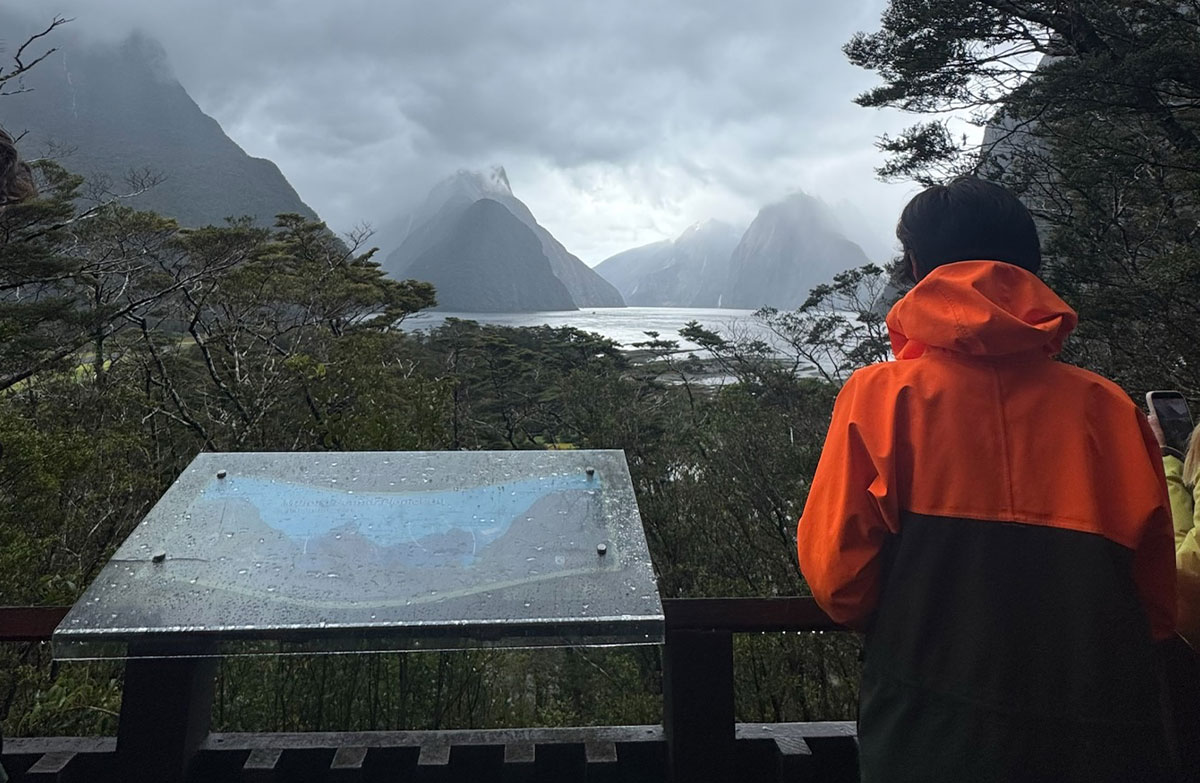
DOC says Piopiotahi Milford Sound is one of the wettest places in New Zealand, with up to 7 metres of rain each year, and that weather can change quickly. Visit Fiordland says it receives around 6.5 to 7 metres of rain a year, has had up to 9 metres, and calls it the wettest inhabited place on the planet. Neither page explains how its figure was measured, so we show both. For the wider Fiordland area, DOC's weather page gives an average of about 7 metres a year over an average of about 200 rain days. Tourism New Zealand says it has roughly 180 days of rain each year and advises not to cancel a trip because rain is forecast: when it rains, it says, the mountains are draped in mist and bursting with waterfalls. Rain does not change the need to check the NZTA road status before you drive.
04 / Temperature
How warm is it?
Tourism New Zealand gives typical highs of 19 degrees Celsius in summer and 10 degrees in winter.
| Season | Typical high | Who says |
|---|---|---|
| Summer, December to February | 19 degrees Celsius | Tourism New Zealand |
| Winter, June to August | 10 degrees Celsius | Tourism New Zealand |
| Spring, September to November | Higher rainfall and even snow to sea level are possible | Visit Fiordland |
05 / On site
What should I pack, and what does DOC ask of visitors?
Pack for all weather, take your rubbish home, leave pets at home and do not feed the kea.
- 01Pack for the day.
DOC advises packing extra food, water, warm clothes, sunscreen and insect repellent for the Milford Road, and its media release adds wet weather gear.
- 02Facilities and rubbish.
A DOC media release says visitor facilities are kept to a minimum and that people should take out all they bring into the park, including rubbish.
- 03Pets.
DOC's journey tips say not to take your dog, as pets are not allowed in Fiordland National Park. A DOC media release adds that this applies even in your vehicle, because pets pose a serious threat to wildlife.
- 04Wildlife.
DOC says not to feed kea or other wildlife, because human food can harm them and change their behaviour.
06 / Rules and safety
What facilities, rules and safety advice apply?
Toilets are few, there is no drone flying without a permit and no freedom camping beside the Milford Road, and after a strong earthquake you move to higher ground away from the water.
Each point is from DOC.
- Toilets.
Public toilets are at Te Anau, Knobs Flat and Piopiotahi Milford Sound.
- Drones.
Flying a drone without a permit is strictly prohibited in the Milford Road and Milford Sound area.
- Camping.
Freedom camping within 200 metres of the road is not allowed on the Milford Road. There are several DOC campsites between Te Anau and The Divide.
- Earthquakes.
A large earthquake could trigger a landslide generated tsunami in Piopiotahi Milford Sound. Drop, cover and hold, then move to higher ground away from the water.
- Arriving on foot.
The Milford Track finishes at Sandfly Point, with a 20 minute boat trip to Milford Sound, where there are bus services back to Te Anau and on to Queenstown.
07 / The fiord
What is the fiord like?
Long, steep and deep, and part of a national park.
Each figure is from the source named.
Length
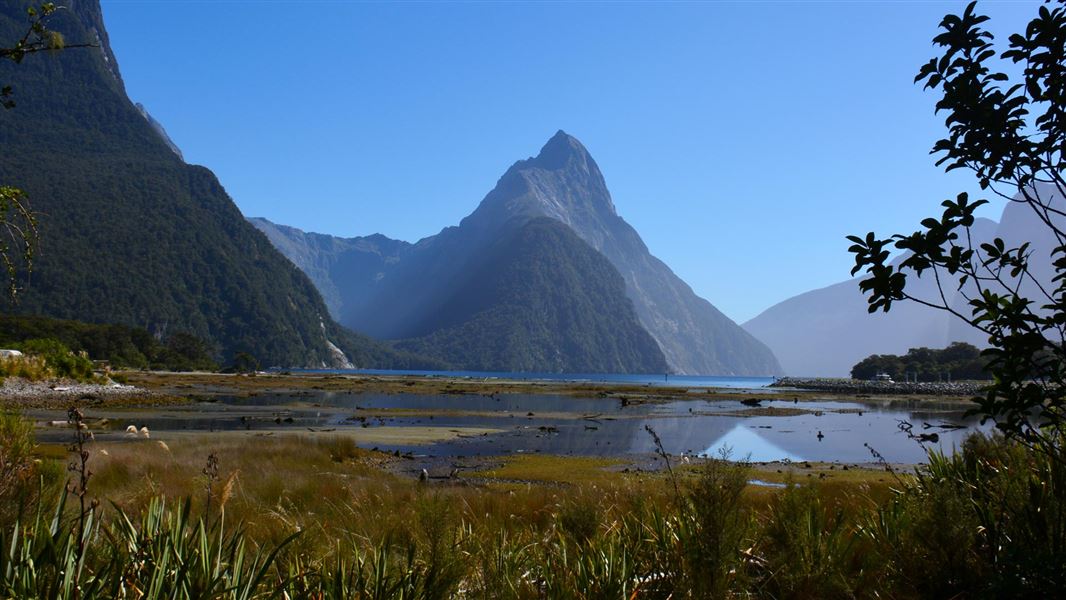
Mitre Peak
One of fourteen
08 / Wildlife
What wildlife might a cruise show?
RealNZ names dolphins, fur seals and two kinds of penguin, with tawaki sightings less predictable.
RealNZ says these animals are present year round, with tawaki sightings less predictable.
- Bottlenose dolphins and New Zealand fur seals.
Present year round according to RealNZ.
- Tawaki and little blue penguins.
Tawaki is the Fiordland crested penguin.
Want to look for them from the water?
These two cruises leave from the Milford Sound Visitor Terminal, and each one's own listing names the animals above: fur seals, dolphins and penguins. No cruise can promise a sighting.